

Moving to Mauritius from France and Buying Property in 2026
Moving to Mauritius from France and buying property requires coordinated planning for residence, tax, property eligibility, banking, schooling and daily life.

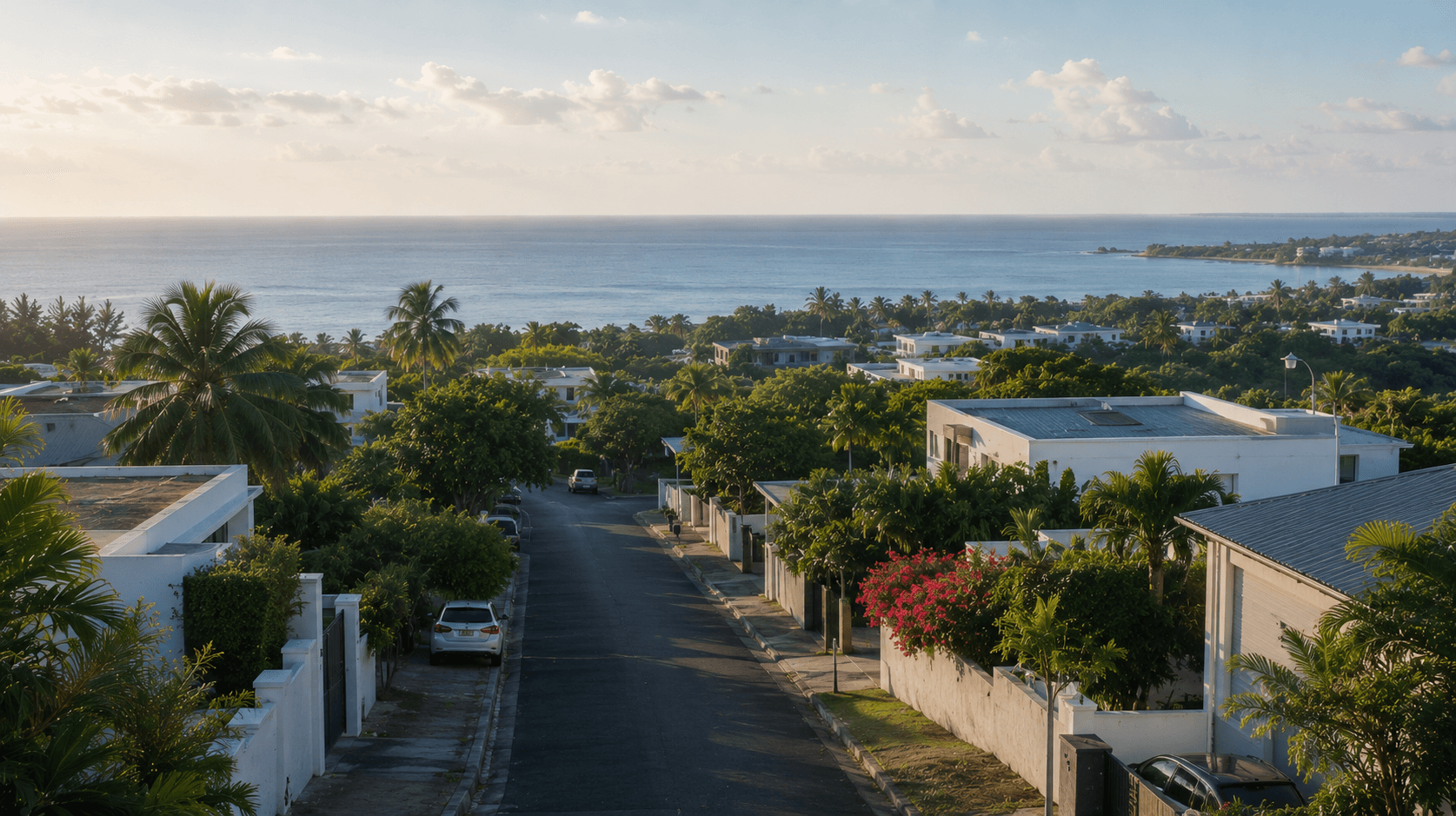
Moving to Mauritius from France and buying property requires more than choosing a home. French buyers need to coordinate property eligibility, residence, tax, banking, schooling, healthcare and the practical transition between the two countries.
The property should fit both the legal acquisition route and the life that will follow. A buyer planning a permanent relocation will not make the same decisions as someone seeking a second home, a part-time base or a rental asset.
Define the relocation plan before choosing a property
Before searching, buyers should decide whether they intend to relocate permanently, divide their time between France and Mauritius, retire, work remotely, operate a business or purchase primarily for investment. This affects the residence route, property type, location, financing and documents required.
A property purchase is not required for every longer stay in Mauritius. Premium Visa, retirement and occupation-based routes may be more suitable for some profiles. Property and immigration planning should therefore be considered together rather than treated as automatic consequences of one another.
Confirm that the property is open to the buyer
A French national who does not also hold Mauritian citizenship is treated as a non-citizen for property acquisition. The buyer cannot purchase every residential property freely and must use an authorised route or obtain the required approval.
The main regulated routes include PDS, Smart City, IHS, legacy IRS and RES projects, and eligible apartments in buildings of at least two floors above ground level under the G+2 route. Each route has different approval, use and residence implications.
Before committing, the buyer should confirm:
• that the property is legally accessible to a non-citizen
• the exact acquisition route and approval process
• whether the unit supports residence eligibility
• the documents required before reservation and deed signature
• the expected payment, approval and registration timetable
For a comparison of the available routes, see our article on property investment schemes in Mauritius.
Separate residence rights from tax residence
Short-stay visitor entry does not create a right to relocate. A qualifying property purchase under an approved route may support a residence permit where the acquisition meets the current conditions, generally including a minimum value of USD 375,000. The permit remains linked to continued ownership of the qualifying property.
Not every property open to foreign buyers provides residence rights, and a residence permit does not automatically make its holder tax resident in Mauritius. Mauritian tax residence is determined separately, including through domicile, presence for at least 183 days in an income year, or an aggregate of at least 270 days over that income year and the two preceding years.
Buyers should confirm the residence route, dependent eligibility and application timing before treating a property as the basis of a family relocation.
Plan the French tax departure before moving
Leaving France does not automatically end French tax residence or all French filing obligations. France considers factors such as the household home, principal place of stay, main professional activity and centre of economic interests. If both countries could treat the person as resident, the France–Mauritius tax treaty must be applied to the actual facts.
The year after departure, the taxpayer must report the change of address and file the required departure-year returns. French-source income, including rent from French property, may remain taxable in France subject to the treaty.
French real estate can also remain within the scope of IFI when the net taxable French property portfolio exceeds EUR 1.3 million. Certain shareholders may additionally fall within the French exit-tax rules if they have been French tax residents for at least six of the previous ten years and meet the relevant shareholding or EUR 800,000 value thresholds.
Tax residence, French assets, pensions, company interests and succession planning should therefore be reviewed before the move, not after completion of the property purchase.
Prepare banking, currency and acquisition costs early
Mauritian banks, the notary and regulated professionals will need to verify the buyer's identity, source of funds and transaction structure. Documents may include passports, proof of address, bank statements, evidence of income or asset sales, inheritance records, corporate documents and the property approval file.
For new acquisitions under IRS, RES, IHS, PDS and Smart City, rules in force since 13 December 2024 require funds to be transferred from abroad in hard convertible currency, with 85% of the purchase price paid to the promoter in Mauritian rupees. The remaining 15% may be paid in foreign currency or Mauritian rupees. This specific rule does not apply in the same way to G+2 acquisitions.
Under the Registration Duty Act currently in force, relevant deeds registered on or after 1 July 2026 attract registration duty of 10% for the non-citizen buyer. The 2026–27 Budget announced a further review of duties and taxes under EDB property schemes, so the notary should confirm the rate and total acquisition budget immediately before commitment.
Choose a location for everyday life
Location should be tested against daily routines rather than holiday impressions. The North offers strong access to coastal services, shopping and an established international community. The West often suits families and buyers who prioritise outdoor living, while the Central Plateau can be more practical for schools, healthcare, offices and year-round commuting.
School location, work patterns, airport travel, healthcare, rental plans and the amount of time spent in Mauritius should all shape the shortlist. A property that looks attractive during a visit may be less suitable once school runs and weekday travel are considered.
Families can compare the main international schools in Mauritius before narrowing the property search.
For wider relocation considerations, see our article on living in Mauritius as a foreigner.
Our overview of the best areas to buy property in Mauritius compares the main regions by buyer profile.
What French buyers should confirm before signing
• the legal acquisition route and buyer eligibility
• whether the property meets the intended residence objective
• the French and Mauritian tax-residence analysis
• the treatment of French income, property, IFI and any potential exit tax
• the source-of-funds file and payment-currency mechanics
• the current registration duty and total acquisition cost
• schooling, healthcare, work and travel requirements
• the suitability of the location for daily life and any rental plan
These checks connect the property decision with the wider relocation strategy and reduce the risk of discovering a legal, tax or practical mismatch after reservation.
Frequently asked questions
Can French citizens buy property in Mauritius?
Yes. A French citizen who is not also Mauritian may buy through an authorised route or with the required approval. Not every residential property is available to non-citizens.
Can buying property provide a residence permit?
Yes, where the property falls under a qualifying route and meets the applicable conditions, generally including a purchase value of at least USD 375,000. Residence is not automatic for every foreign-buyer property.
Does a residence permit make the buyer tax resident in Mauritius?
No. Immigration status and tax residence are separate. Tax residence depends on domicile, physical presence and, where relevant, the France–Mauritius treaty.
What French taxes may continue after relocation?
French-source income, local property taxes and IFI on qualifying French real estate may continue. Some shareholders may also need to consider exit tax before transferring their tax residence.
Build the move around one coordinated plan
Moving to Mauritius from France and buying property can combine a new lifestyle, residence planning and long-term ownership. The strongest projects align the acquisition route, residence basis, French tax departure, banking file and location before the buyer signs.
A well-chosen home is important, but the quality of the move depends equally on the legal, financial and practical planning surrounding it.
Considering a move from France to Mauritius?
Our team can help you explore properties aligned with your relocation plans, family needs, lifestyle priorities and long-term ownership goals.
Discover our properties | Contact us
Sources
• Laws of Mauritius, Registration Duty Act, Version 9
• Economic Development Board Mauritius, Amendments to IRS, RES, IHS, PDS and SCS Regulations
• Economic Development Board Mauritius, Annex to the Budget Speech 2026–2027
• Residency Mauritius, Property Development Scheme
• Passport and Immigration Office, Visa Requirements
• Mauritius Revenue Authority, Foreign Income and Individual Residence
• Mauritius Revenue Authority, France–Mauritius Double Taxation Convention
• French Tax Authority, Moving Abroad and Departure-Year Filing
• French Tax Authority, Non-Resident Income in France
• French Tax Authority, Property Wealth Tax 2026
• French Tax Authority, Exit Tax
The information contained in this article is provided for general guidance only and reflects the situation at the time of publication. Property eligibility, registration duties, payment rules, residence conditions, tax-residence tests, French tax obligations, school admissions, banking requirements and relocation procedures may change or vary according to the buyer's circumstances. Readers should verify all important points with their notary and qualified legal, tax, immigration and financial advisers before making any purchase or relocation decision.
About the Author